
Disclosure: As an Amazon Associate I earn from qualifying purchases. Some links on this page are affiliate links, which cost you nothing extra. This guide is general information, not medical advice.
“Tinnitus masking” is printed on the box of almost every hearing aid sold for ringing in the ears. Hardly anyone explains what it means.
I wear a Phonak every day, and I live with tinnitus. Mine has several programs. Two are installed, and I only use one of them. I’ll be honest: I’m not even sure that program is a tinnitus masking program. What I do know is this. When I put them in, they’re powerful enough that I can hear a conversation over the ringing. For me, that’s what matters.
It turns out that’s one of the two main ways hearing aids can help tinnitus. Here’s how both work, where they fall short, and what to ask your audiologist.
The Short Answer
- Hearing aids can help tinnitus in two ways: by amplifying the sounds around you, and, on some models, by playing masking sounds.
- Which one helps depends on you and on your hearing.
- Neither cures tinnitus. At best, the ringing becomes less noticeable and easier to live with.
Way 1: Amplification
When hearing drops, your brain gets less sound from the world, and the ringing can stand out against the quiet. A hearing aid turns up the sounds you’ve been missing. With more real sound coming in, the tinnitus has less to compete against.
HearingTrackernotes that in one expert poll, about 60% of tinnitus patients said they got at least some relief from hearing aids, though that was a 2007 poll and not a trial.

This is the way I experience it.
I’m not listening to a special tinnitus sound. I’m just hearing people clearly, and that pushes the ringing into the background.
Honestly, it’s still never the same as when I had my normal hearing. Work and dinner at work still have that little stress, but I take it anyway rather than being cut off from the world.
Way 2: Built-In Masking Sounds
Some hearing aids can also play a soft sound, such as white noise, pink noise or nature sounds, to blend with the tinnitus so it stands out less.
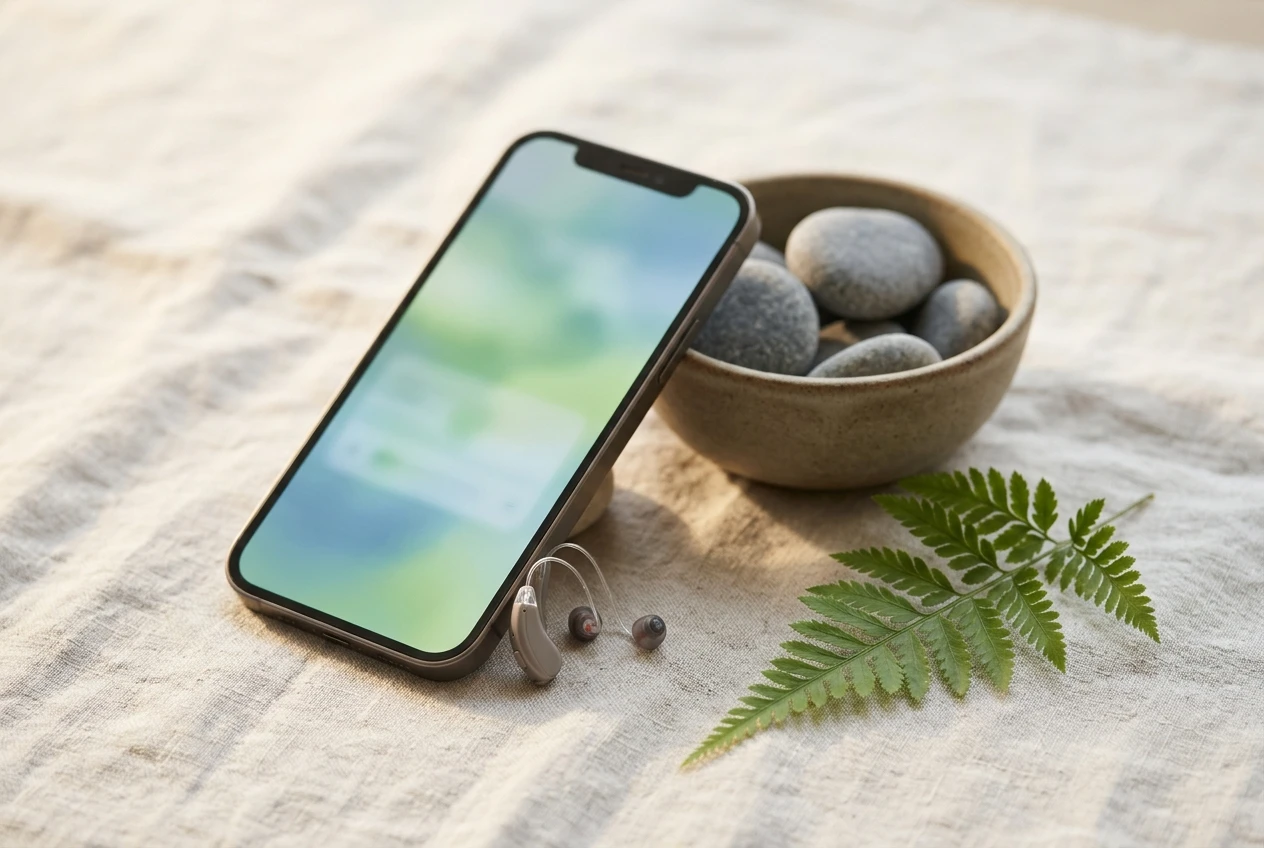
Masking sounds are sometimes called sound enrichment or a sound generator. I covered where sound enrichment fits in the 2026 tinnitus guideline.
A few things to know:
- Sounds vary. White noise has equal energy across all pitches. Pink noise has more in the lower ones. Nature sounds like waves are softer to some people. It’s a matter of trial and error.
- Some masking is shaped to your hearing. A professional can fit it to your hearing test.
- Control differs by brand. According to HearingTracker, some apps let you adjust the masker’s pitch or intensity, while Phonak’s app allows only volume changes. Check the current model before you rely on that.
- Some people notice quiet afterwards. That’s called residual inhibition. It can last minutes to hours, and it doesn’t happen for everyone.
“Tinnitus Mode” Means Different Things
Brands use their own names.
Phonak calls its option Tinnitus Balance, and Phonak’s professional site describes it as a noise generator that makes a broadband sound for use in tinnitus management.
Other brands use different approaches. HearingTracker’s overview mentions Signia’s notch therapy and Widex’s Zen programs, for example. These features usually have to be set up by an audiologist, so a hearing aid can have the feature and you still won’t get it unless it’s switched on and programmed.
That’s why I can’t tell you whether my own Phonak has it turned on.
When Masking Doesn’t Help
- If your hearing is close to normal, amplification has less to work with. Other approaches, such as counselling or a standalone sound generator, may suit you better.
- The evidence is modest. HearingTracker cites a 2018 Cochrane review that found only low-quality evidence for sound-based devices. So expect something that helps some people, not a guaranteed fix.
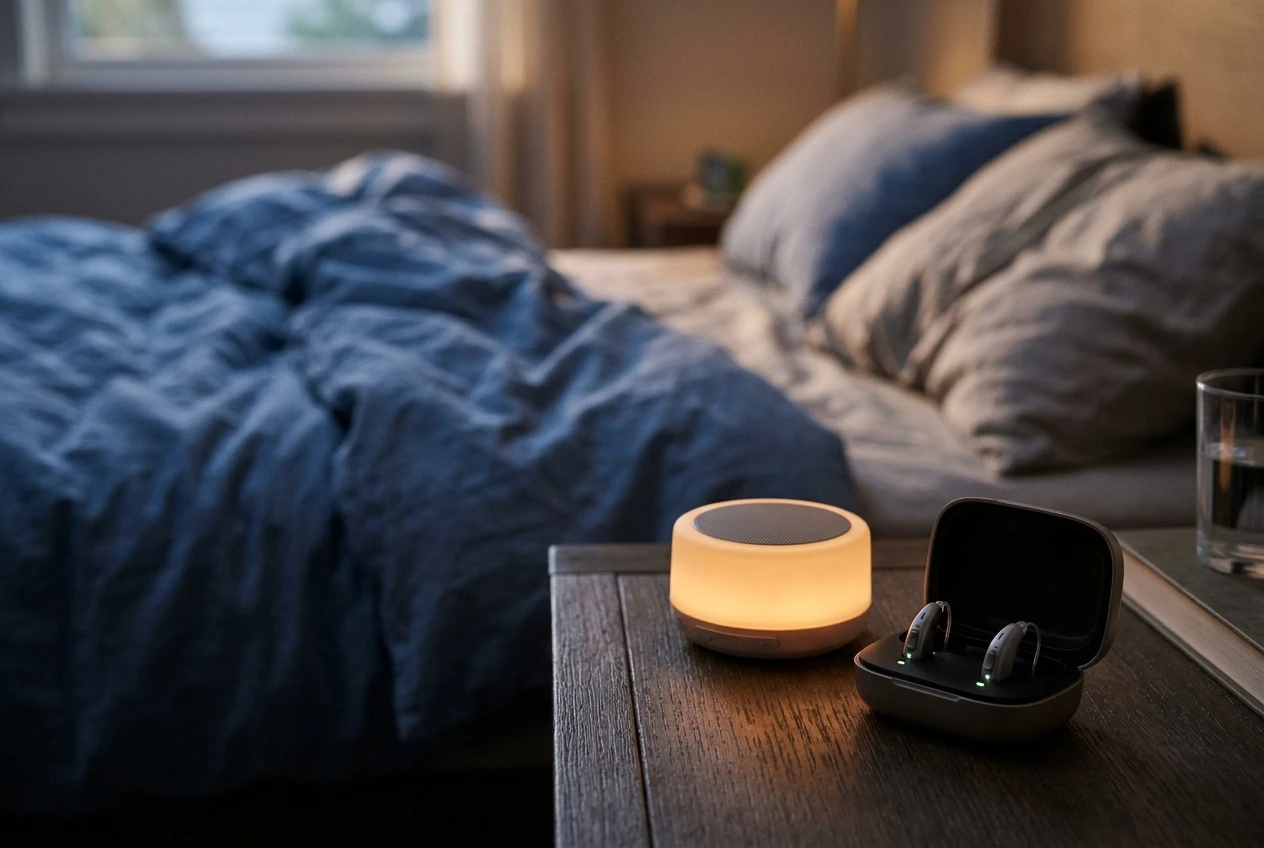
- It’s not built for night. Hearing aids can fall out, cause discomfort, and need charging. For sleep, a sound machine or pre-set speaker may work better.
- Too loud can backfire. A masker that’s set too high can leave your ears tired and the ringing louder afterwards. HearingTracker suggests keeping a Phonak masker just at the edge of what you can hear.
- It doesn’t treat the cause. It manages how you notice the sound.
Questions to Ask Your Audiologist
I’m going to ask my own audiologist the first of these myself.

- Is any program on my hearing aids a tinnitus program? If so, which one, and what does it do?
- How loud should it be? Ask for it to be tuned to your hearing test.
- Can I adjust it myself in the app, or only you?
- Can you add a masking program if I don’t have one?
- How long should I give it before we review the settings?
More shopping questions are in 7 Questions to Ask Before Buying a Hearing Aid for Tinnitus, and I compare both buying routes inOTC vs Prescription Hearing Aids for Tinnitus.If you’re curious about an OTC aid with masking sounds, see myElehear Beyond 2 Pro review.
See a Doctor First If You Have
- Ringing or hearing loss in one ear only
- Sudden hearing loss or sudden-onset tinnitus
- Dizziness, ear pain, fluid or discharge
- Tinnitus that pulses with your heartbeat
My Honest Take
I don’t know what label my program wears. I know what it does for me: I can follow a conversation, and the ringing doesn’t win. If you’re shopping, don’t get stuck on the word “masking.” Ask what the hearing aid will actually do for you in the situations that matter, at work, at home, in a quiet room, and judge it by that.
Frequently Asked Questions
Do hearing aids mask tinnitus? Some do. They can help by amplifying sounds around you, and some models also play masking sounds. It depends on the model and how it’s programmed.
Do I need a special hearing aid for tinnitus? Not always. If you have hearing loss, ordinary amplification may help. If you want masking sounds, check the specific model and ask whether the feature is turned on.
Can I use masking sounds at night? Hearing aids aren’t ideal for overnight wear. A sound machine or pre-set speaker is usually more comfortable for sleep.
Does masking cure tinnitus? No. It makes it less noticeable. It doesn’t treat the underlying cause.
This article is general information and not a substitute for medical advice. Please speak to your doctor or audiologist about your own situation.