
Disclosure: As an Amazon Associate, I earn from qualifying purchases. Some links on this page are affiliate links, which cost you nothing extra. This guide is general information, not medical advice.
The first time I realised I wasn’t hearing my wife’s words, I was at home, the day after attending the Rihanna concert. I knew my life would never be the same again. I knew that whether I liked it or not, I had no choice but to wear a hearing aid.
I wear hearing aids every day now, and I live with tinnitus. If you’re standing where I once stood, looking at a price tag and a box that says “tinnitus relief”, I want to save you some of the worry.
I’m a pharmacist, so my instinct is to ask questions before I put anything into my body, or my ears.
One question that I didn’t ask and wish that I did was, “What other brands of hearing aids can I try?””
I guess at the time, they were offering me a trial on the “Phonak.” I thought it that I would be seen as ungrateful if I asked about the other brands. Nevertheless, it is what it is; I have no regrets with Phonak. They are my lifesavers.
These are the seven questions I’d ask now.
The 7 Questions at a Glance
- Have I had a proper hearing test?
- Do I need OTC or prescription?
- What tinnitus features does it really have?
- What are the trial and return terms?
- What support comes with it?
- What will it really cost, and what’s covered?
- What if it doesn’t help my tinnitus?
1. Have I Had a Proper Hearing Test?
Before anything else, find out what’s actually going on with your hearing.
Tinnitus and hearing loss often travel together, and a test shows which one you’re dealing with. It’s also why the new US tinnitus guideline starts with a hearing evaluation. I covered the rest in my article on the new tinnitus guidelines.
My hearing test was done, within that week of me struggling with conversations at work, home and in social life. The result of the hearing test revealed a 60% hearing loss in my only good ear. I knew that this was serious, and I was in trouble.

See a doctor before buying any hearing aid if you have:
- Ringing or hearing loss in one ear only, or a clear difference between ears
- Sudden hearing loss or sudden-onset tinnitus
- Dizziness, ear pain, fluid, or discharge
- Tinnitus that pulses with your heartbeat
Those can have causes a hearing aid won’t fix.
2. Do I Need an OTC or a Prescription Hearing Aid?
Over-the-counter (OTC) aids are made for adults who feel they have mild to moderate hearing loss. Prescription aids are fitted by a professional and cover any level of loss. If you can’t tell which group you’re in, go back to question 1. I put the two side by side in OTC vs Prescription Hearing Aids for Tinnitus.
I was fortunate at the time to be able to afford a prescription hearing aid. Mind you, I did try one of those hearing aids from the Chinese warehouses, but it was more an amplifier. That means that it made EVERYTHING loud, and it was highly stressful.
3. What Tinnitus Features Does It Really Have?
“Tinnitus-friendly” on a product page can mean almost nothing, so I ask:
- Does it have masking sounds (white noise, ocean sounds, and so on)? How many?
- Can I adjust them in an app, or only with a professional?
- Is the tinnitus feature built in, or an extra?
Some OTC models include masking sounds. NCOA’s “best for tinnitus” OTC pick is the Elehear Beyond Pro, and I went through the specs of the newer model in my Elehear Beyond 2 Pro review. Prescription models often let a professional tune the sound to your hearing loss.

My Phonak helps with tinnitus in a major way. That is by allowing me to hear the speaker over the ringing noises. It makes a huge difference. It amplifies the speaker’s words and does so in a way without making the background noises a hindrance.
No hearing aid cures tinnitus. At best, it makes it less noticeable and easier to live with.
4. What Are the Trial and Return Terms?
This question protects your money. Ask:
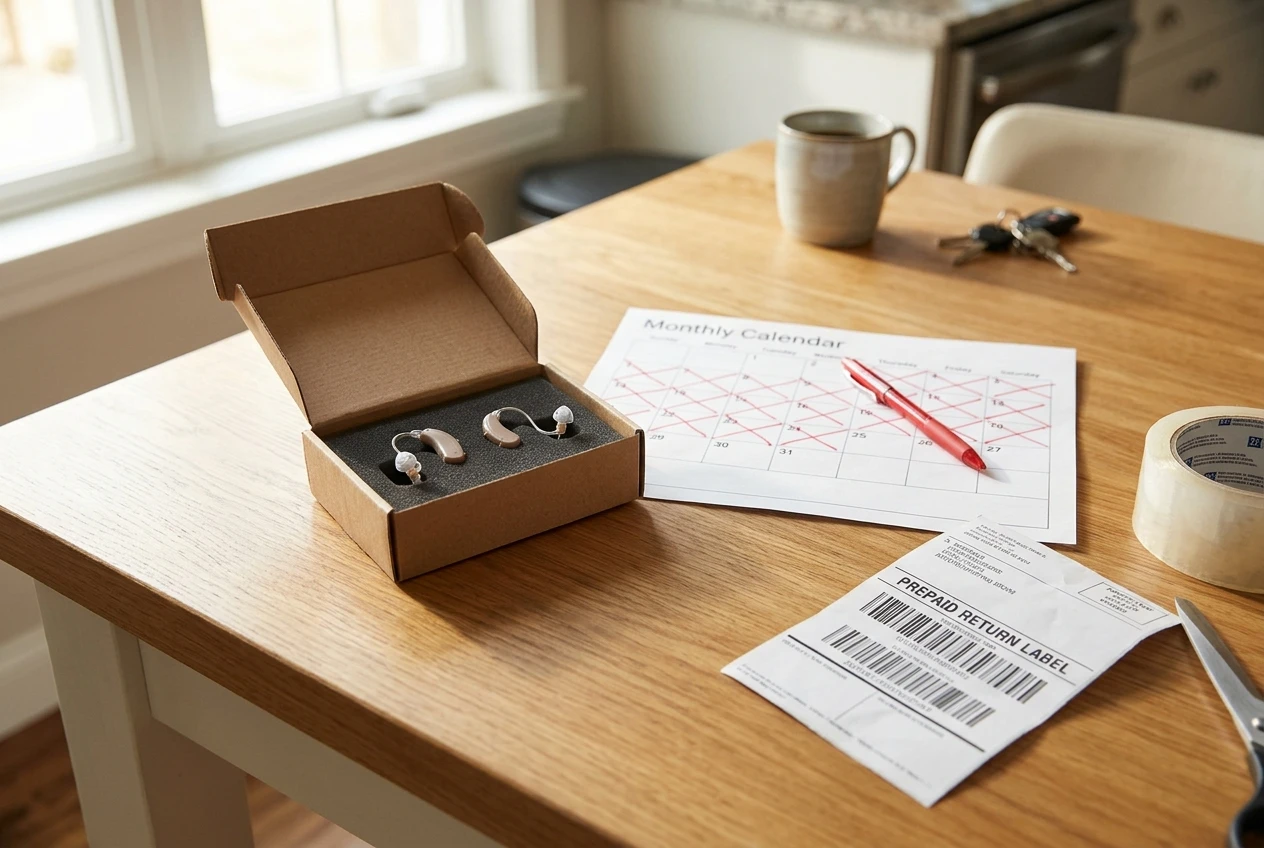
- How many days is the trial? NCOA prefers 100 days because your brain needs time to adjust. Under 45 days is short.
- Who pays return shipping?
- Is there a restocking fee?
- Does the clock start on purchase or on delivery?
Screenshot the policy before you pay. Policies change.
5. What Support Comes With It?
A hearing aid almost always needs adjusting after the first week or two.
Ask:
- Are fitting and follow-up visits included in the price?
- Is there remote help, or a real person to call?
- Who fixes it if it breaks?
6. What Will It Really Cost, and What’s Covered?
Look at the total, not just the sticker price.
- OTC aids cost less, but the range is wide. Prescription aids usually cost more, and the price often includes fitting and follow-up.
- Original Medicare does not cover hearing aids or the exams to fit them. Some Medicare Advantage plans offer hearing benefits, so check yours.
- HSA and FSA funds can often be used.
- Ask about the warranty. A year is common for OTC. Prescription aids often come with longer cover.
Prices change, so check the live price before you buy.
7. What If It Doesn’t Help My Tinnitus?
Ask this before you buy, not after.
Hearing aids help many people because they bring back sounds you’ve been missing, which can make the ringing less prominent. They don’t work the same for everyone.

If yours doesn’t help:
- Return it within the trial window (question 4).
- Ask for it to be re-tuned. Settings matter a lot.
- Check the volume. Too loud can leave you with louder ringing afterward.
- Talk to your clinician about other options, such as sound therapy or counselling. I looked at one high-end route in my Lenire article.
Check your medicines too. Some can affect hearing or tinnitus, as I explained in tinnitus and antidepressants. Never stop a medicine because of a hearing symptom without speaking to your prescriber first.
My Honest Take
If I could only ask two questions, they’d be the first and the fourth: get a proper test, and know exactly how you can get your money back. The rest is easier after that.
And remember that if you are still adjusting to your new aid, and need support or have further questions, just reach out to me……I am on your side and will help you in any way that I can.
Frequently Asked Questions
Do hearing aids help tinnitus? For many people with hearing loss, yes. By bringing back sounds you’ve been missing, they can make tinnitus less noticeable. Some also have masking sounds. They don’t cure it.
Can I buy a hearing aid without a hearing test? OTC aids don’t require one. A test is still strongly recommended, because it rules out causes a hearing aid can’t fix.
How long should the trial period be? NCOA prefers 100 days. Under 45 days is short, since adjusting takes time.
Does Medicare cover hearing aids? Original Medicare doesn’t. Some Medicare Advantage plans offer hearing benefits, so check your plan.
This article is general information and not a substitute for medical advice. Please speak to your doctor or audiologist about your own situation.