
Important first: if you take an antidepressant, do not stop or change it because of this article. Stopping suddenly can make you ill and can bring depression or anxiety back. Speak to your doctor or pharmacist first.
If you live with tinnitus and take an antidepressant, a recent headline probably gave you a jolt: “The brain’s feel-good chemical may be secretly fueling tinnitus.”
I’m a pharmacist who lives with tinnitus, so this one landed close to home. I read the coverage of the study, and the Cochrane review on antidepressants for tinnitus. Here is what it found, what it can’t tell you, and what I’d do if I were in your shoes.
The Short Version
- A 2026 study in mice found a serotonin pathway that connects to the brain’s hearing system and seems to produce tinnitus-like behaviour when it is switched on.
- That does not show that antidepressants cause tinnitus in people, and it is not a reason to stop taking one.
- Some people do report tinnitus getting worse on certain medicines. If that’s you, it’s worth a conversation with your prescriber, not a solo decision.
What the Study Found
The research came from Oregon Health & Science University and Anhui University in China, and was published in April 2026 in Proceedings of the National Academy of Sciences (PNAS). It was reported under the title “A discrete serotonergic circuit involved in the generation of tinnitus behavior.”
In plain terms:
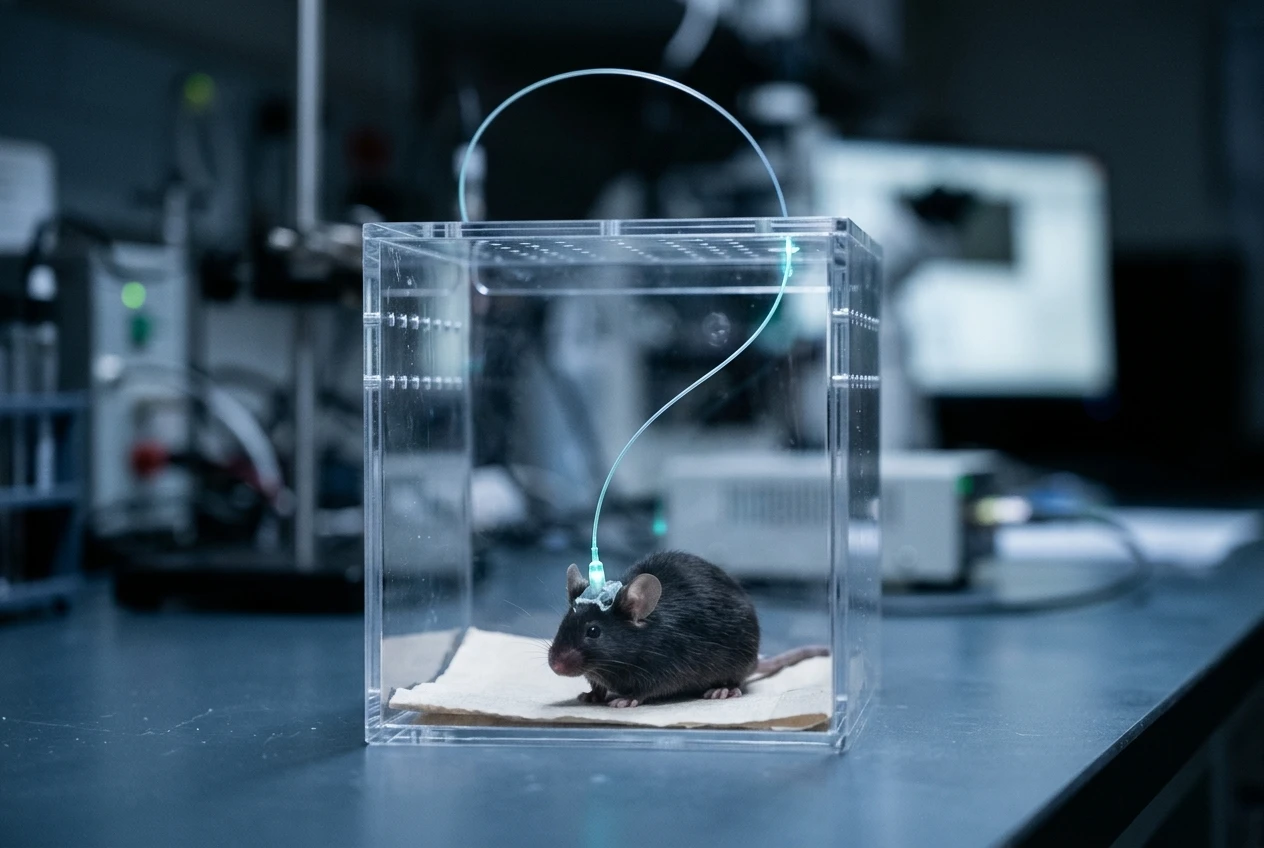
- The researchers followed serotonin-producing nerve cells in a part of the brainstem called the dorsal raphe nucleus.
- They found these cells connect directly to the dorsal cochlear nucleus, an early hearing area of the brain that is known to become overactive in tinnitus.
- Using light to switch those serotonin cells on (a technique called optogenetics), they saw more activity in the hearing area and behaviour in the mice that the scientists interpreted as tinnitus-like. Switching the circuit off reduced that behaviour.
- One of the tests was whether the mice noticed short silent gaps in a background sound, a common animal stand-in for tinnitus.
Because many antidepressants raise serotonin, the authors noted the findings fit with some patients’ reports that tinnitus worsens on serotonin-raising medicines.
What a Mouse Study Can’t Tell You
This is where a pharmacist’s caution matters.
- Mice aren’t people. A pathway that does something in a mouse may do something different, or very little, in humans.
- Switching on a circuit isn’t the same as taking a tablet. The researchers used light to activate specific nerve cells. An antidepressant works throughout the whole brain, more slowly and more gently.
- “Tinnitus-like behaviour” is an inference. Mice can’t tell us they hear ringing. Scientists use behaviour tests as a proxy.
- It’s one study. Findings like this need to be repeated, and tested in people, before they change medical advice. The coverage I read did not report how many mice were used, so I can’t tell you the sample size.
- The authors themselves are careful. One of them, Dr. Laurence Trussell, described it as “a delicate balance,” and suggested future drugs might raise serotonin in some brain areas while avoiding others. Nobody in the coverage I read told patients to change their medication.
What We Already Know in People
The mouse study is new. The question isn’t.
Do antidepressants treat tinnitus?
The Cochrane review looked at six randomised trials with 610 people, including tricyclic antidepressants, the SSRI paroxetine and trazodone. It found insufficient evidence that antidepressants improve tinnitus. Some trials showed slight improvements that may reflect bias, and side effects such as drowsiness, dry mouth, and sexual problems were common.
The 2026 guideline agrees. The updated American guideline recommends against routine medicines for tinnitus itself. I covered that in my article on the new tinnitus guidelines. That is about treating tinnitus. It does not mean people with depression or anxiety should avoid antidepressants.
Tinnitus as a side effect. Some people do notice tinnitus starting or worsening after beginning a medicine, and tinnitus appears as a reported side effect in the information leaflets of a number of medicines. I haven’t verified which antidepressants list it in your country, so check the leaflet for your own tablet or ask your pharmacist.
Depression and tinnitus often go together. Low mood, anxiety and poor sleep make tinnitus feel louder and harder to cope with. Untreated depression can make tinnitus worse, which is why the guideline asks clinicians to check on your mental health. If an antidepressant is helping your mood, it may also be helping you cope with the ringing.
What I’d Do If This Worried Me

- Keep taking your medicine as prescribed.
- Write down the timeline. When did the tinnitus start, and when did you begin or change any medicine, including over-the-counter ones and supplements? A clear timeline helps your clinician more than any headline.
- Talk to your prescriber or pharmacist if you think a medicine has made your tinnitus worse. They can check the dose, the timing, and whether other medicines or hearing issues could be involved.
- Never stop suddenly. Stopping an antidepressant abruptly can cause withdrawal-type symptoms (dizziness, nausea, “brain zaps”, anxiety) and can make depression return. Any change should be planned and supervised.
- Get a hearing test. Tinnitus is often linked to hearing loss. The guideline’s first step is a comprehensive hearing evaluation, whatever medicines you take.
- Look after sleep and stress, which affect how loud tinnitus feels. See my article on managing your mental health with tinnitus .
- Get help if you’re struggling. If tinnitus or low mood is overwhelming, tell your doctor.
What Might Come Next

The authors raised the possibility of future drugs that target particular serotonin circuits, so that the mood benefits stay and the hearing side effects don’t. That is a hope, not a treatment, and it’s likely to be years away at best.
Frequently Asked Questions
Do antidepressants cause tinnitus? For some people, tinnitus may start or worsen after beginning certain medicines, but this isn’t true for everyone. The mouse study doesn’t prove it in humans. Ask your pharmacist about your own medicine.
Should I stop my antidepressant if I have tinnitus? No, not on your own. Talk to your prescriber first. Stopping suddenly can cause withdrawal symptoms and a return of depression or anxiety.
Can antidepressants treat tinnitus? The Cochrane review found insufficient evidence that they do. The 2026 US guideline recommends against routine medicines for tinnitus itself.
Does serotonin cause tinnitus? In mice, activating a particular serotonin circuit produced tinnitus-like behaviour. We don’t yet know how much this matters in people.
What helps tinnitus if medicine doesn’t? A hearing evaluation, hearing aids if you have hearing loss, cognitive behavioural therapy and sound enrichment are the best-supported options.
My Take
This study is interesting science, and it may one day help design better drugs. Today, it doesn’t change what you should do. If your antidepressant is helping your mood, keep taking it. If you suspect it’s affecting your tinnitus, take your timeline to your prescriber or pharmacist and work out a plan together.
Have you noticed a change in your tinnitus after starting a medicine? Tell me in the comments, but please don’t share your own medication changes as advice for others.
This article is general information and not medical advice. Speak to your doctor or pharmacist about your own medicines.