
For years, the advice for ringing in the ears sounded a lot like “learn to live with it.” In October 2026, the American Academy of Otolaryngology-Head and Neck Surgery Foundation (AAO-HNSF) published an updated clinical practice guideline for tinnitus, replacing the 2014 version. As a pharmacist who lives with tinnitus, I read the AAO-HNS release and the coverage of it, because I wanted to know one thing: does this change what you should do next?
Short answer: the new tinnitus guidelines of 2026 do not turn everything upside down. They do make a few things clearer, add some new topics, and confirm what to skip. Here is what matters, in plain language.
This is US guidance written for clinicians, and it is not medical advice. Use it to prepare for a conversation with your own doctor or audiologist.
Quick Summary: What Changed
- A hearing evaluation for everyone with tinnitus. Not just some patients.
- Clinicians are asked to check on your mental wellbeing, including thoughts of self-harm.
- Lenire (bimodal neuromodulation) is addressed in a new statement.
- New topics: jaw and neck-related (somatosensory) tinnitus, cochlear implants, and follow-up.
- Sound therapy is now called “sound enrichment.”
- Still not recommended: routine supplements, medicines for tinnitus itself, and rTMS.
From the Source
The guideline’s chair, Meredith E. Adams, MD, put the first point simply: every patient with tinnitus should receive a comprehensive hearing evaluation. You can read the full release in the AAO-HNS summary of the updated guideline, and Hearing Review’s coverage is a quick second read.
What Is This Guideline, and Who Is It For?
It is a clinical practice guideline, which means it tells ENT doctors, audiologists and primary care doctors what the evidence supports. It has 16 key action statements and covers adults with persistent, bothersome tinnitus, meaning ringing that has lasted six months or more and affects your life.
Three things to keep in mind:
- It is US guidance. The evidence applies everywhere, but who you see first and what is covered can differ in South Africa.
- It describes what is reasonable for most people, not what is right for you.
- It is not an endorsement of any product.
I have not been able to see the strength rating of every statement, so where the wording matters I will tell you to check the source.
What the Guideline Supports
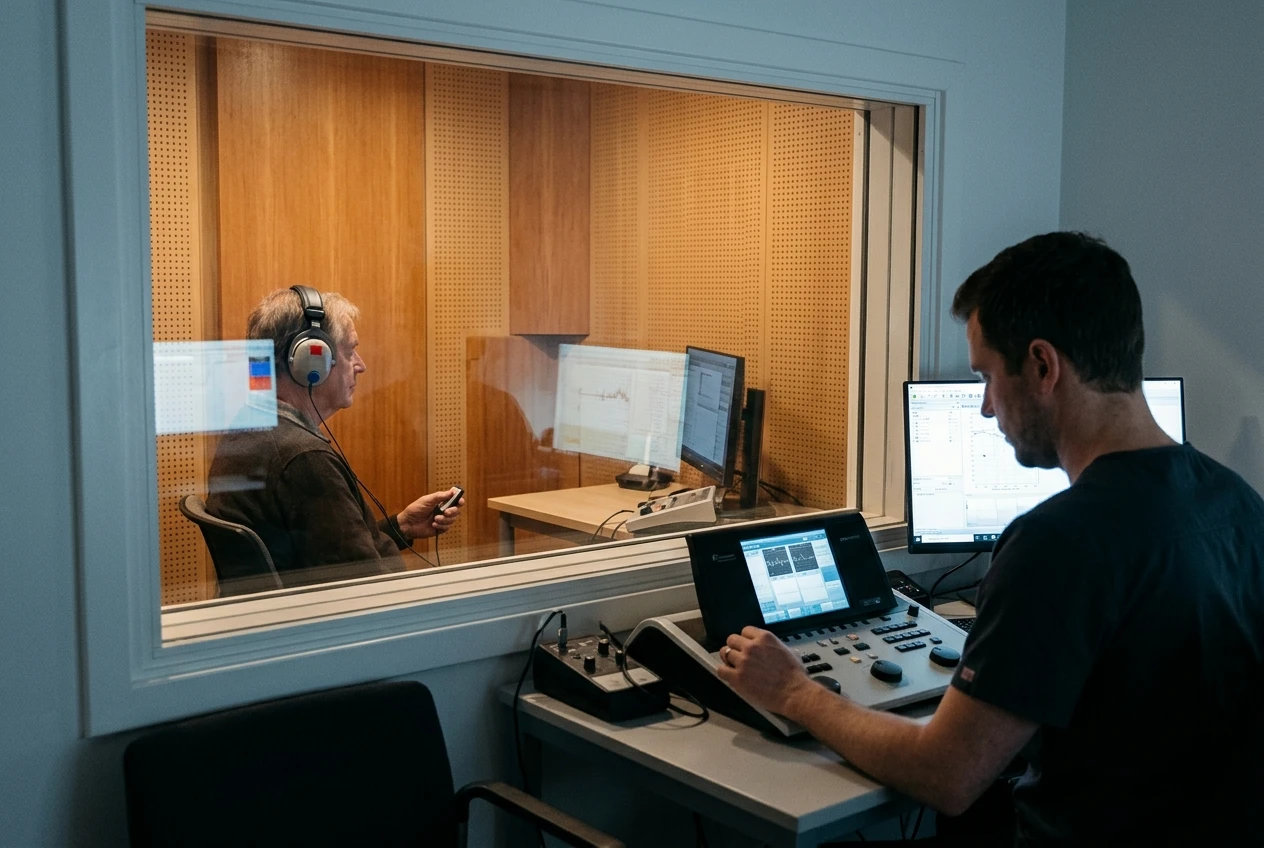
A comprehensive hearing evaluation
Tinnitus and hearing loss often come together, and you cannot choose a sensible treatment until you know how well you hear. A full evaluation by an audiologist also gives you a baseline to compare against later.
A quick workplace or pharmacy screening is not the same thing.
Hearing aids
If the evaluation shows hearing loss, hearing aids are a reasonable next step.
They bring back the speech you are missing in meetings and at the dinner table, and for many people they make tinnitus less noticeable because the brain gets more real sound to attend to.
Choosing one for tinnitus takes more than picking the cheapest model. I looked at one popular over-the-counter option in my Elehear Beyond 2 Pro review, including what you should check before buying from South Africa. [Add link to your “how to choose a hearing aid with tinnitus” guide here.]
Cognitive behavioural therapy (CBT)
CBT does not turn the volume down. It changes how much the ringing disturbs you: the lost sleep, the dread of a quiet room, the way your attention keeps snapping back to the sound. For many people that is the part that wears them down. If tinnitus is costing you sleep, patience or mood, ask about CBT. [Add link to your mental health with tinnitus article here.]
Sound enrichment
This is the guideline’s new name for sound therapy. It covers everything from simple background sound at night, such as a fan or a rain app, to clinician-guided programs.
If silence makes your tinnitus louder, background sound is a cheap thing to try before spending money.

Counselling and education
Understanding what tinnitus is, and what it is not, calms many people down. Good counselling is part of care, not an optional extra.
What Is New This Time
Lenire (bimodal neuromodulation)
Lenire pairs sound with mild electrical stimulation of the tongue. It now has its own statement in the guideline.
I could not see the exact wording or strength of that statement in the summaries available, so read it in the full guideline before drawing conclusions.
A mention in a guideline does not mean it is worth the price for you. Lenire costs around US$4,000; I could not find a South African provider, and I have gone through what the trials measured and did not in my article on whether Lenire tinnitus treatment really works.
Jaw and neck (somatosensory) tinnitus
Some tinnitus is linked to the muscles and joints of the jaw and neck.
A clue is that the sound changes when you clench your teeth, move your jaw or turn your head.
If you notice that, tell your clinician, because it is a different path from a hearing assessment and easy to miss if nobody asks.

Cochlear implants
These are for people with severe hearing loss.
If yours is mild or moderate, this change is useful to know about but not something to plan around. If your hearing has dropped a long way and hearing aids no longer help enough, raise it with an audiologist and an ENT.
Follow-up
Tinnitus rarely gets one treatment and a goodbye. It changes, your hearing changes, and what helped in month one may need adjusting by month six. Ask at your first appointment: “When will I be seen again, and what will we check?”
Mental health and self-harm
The guideline asks clinicians to ask directly about emotional distress and thoughts of self-harm in people with bothersome tinnitus. That may feel unexpected, but constant ringing can wear people down badly, especially when it steals sleep. If this is you, tell your doctor. You are not weak, and it is a recognised part of tinnitus care.
If you are struggling right now, in South Africa you can call the SADAG helpline on 0800 70 80 90. If you are in immediate danger, contact your local emergency services.
What the Guideline Recommends Against
This is the section I wish more people read before opening their wallets. The guideline recommends against routine use of:

- Dietary supplements for tinnitus (ginkgo, melatonin, zinc and the many “tinnitus formulas” sold online)
- Medicines aimed at the tinnitus itself, including antidepressants, anti-seizure drugs, anti-anxiety drugs and ear injections
- rTMS (repetitive transcranial magnetic stimulation)
- Routine imaging and lab tests, unless there is a specific reason such as one-sided or pulsing tinnitus
As a pharmacist, here is how I read that: no pill is proven to treat tinnitus, and if you see a product promising to “cure” or “reverse” it, the guideline is on your side when you walk away.
Do not stop any medicine your doctor has prescribed for another condition because of this. Some medicines can affect hearing or cause ringing, so bring a full list of your medicines and supplements to your appointment, and ask your pharmacist if you are unsure.
What This Means If You Live in South Africa
The recommendations are American, but the sensible steps are the same here:
- Start with a hearing test by a registered audiologist. Ask what your medical aid covers, since audiology benefits vary a lot between plans.
- CBT can be accessed through a psychologist, and some online options exist. Ask whether your clinician has experience with tinnitus.
- Lenire is not something I could find offered locally, and the cost puts it out of reach for most people.
- Buying hearing aids from overseas brings import charges, returns, and warranty questions. Check those before ordering.
Your Action Plan This Week
- Book a comprehensive hearing evaluation if you have not had one.
- Write down your tinnitus details: when it started, one ear or both, whether it pulses, and whether it changes when you clench your jaw or move your neck.
- Bring a list of your medicines and supplements.
- Ask about hearing aids if the evaluation finds hearing loss.
- Ask about CBT if tinnitus is hurting your sleep or mood.
- Try background sound at night before spending on gadgets.
- Skip supplements and “miracle” cures.
- See a doctor promptly if your tinnitus is in one ear only, pulses with your heartbeat, comes with dizziness, or arrives alongside sudden hearing loss.
Frequently Asked Questions
Is there a new tinnitus guideline? Yes. The AAO-HNSF published an updated clinical practice guideline in October 2026, replacing the 2014 version.
Is there a cure for tinnitus? No. The guideline focuses on managing how much tinnitus affects you.
Do hearing aids help tinnitus? For people with hearing loss, they are a recognised part of care and can make tinnitus less noticeable.
Is Lenire recommended? The guideline has a new statement on bimodal neuromodulation. Read the wording yourself, and note the cost and limited availability.
Do supplements work for tinnitus? The guideline recommends against routine use of supplements for tinnitus.
Does the guideline apply in South Africa? It is US guidance, but the evidence behind it is relevant everywhere. Talk to a local audiologist or doctor about your own situation.
My Take
The new guideline will not make tinnitus disappear, but it points in the right direction: test your hearing, treat any hearing loss, get help for the distress, and do not waste money on supplements.
If you take one thing from it, make it the first step. Book that hearing evaluation, then decide what comes next.
If you are weighing hearing aids, start with my Elehear Beyond 2 Pro review. If you are curious about the high-end option, read my Lenire article. Have you had a full hearing evaluation yet? Tell me about your experience in the comments, especially if you have found tinnitus care in South Africa.
This article is general information and not a substitute for medical advice. Please speak to your doctor or audiologist about your own situation.