
Disclosure: As an Amazon Associate I earn from qualifying purchases. Some links here are affiliate links, which cost you nothing extra. I wear Phonak hearing aids that I bought myself, and no brand sponsors this guide. This is general information, not medical advice.
I wear hearing aids every day, and I have tinnitus. Right now there’s a Phonak Audéo [CROS model] in my ears while I write this.
So when people ask me, “Should I buy an over-the-counter hearing aid, or go the prescription route?”, I don’t answer from a brochure. I answer from living with this, and from my day job as a pharmacist, where I spend my time explaining the difference between what a product promises and what it does.
Here’s the honest version. I’ll also tell you up front: I haven’t worn an OTC hearing aid myself, so where I talk about them, I’m relying on published sources, and I’ll say which ones.
The Short Answer
If you only have a minute:
- OTC (over-the-counter) hearing aids are for adults with perceived mild to moderate hearing loss. They cost less, you set them up yourself, and you can order them online or pick them up in a store.
- Prescription hearing aids are fitted by a professional after a full hearing test. They cost more, but they suit any level of hearing loss, they’re tuned to your ears, and you get follow-up care.
- For tinnitus, prescription models tend to have more tinnitus tools and more tuning. Some OTC models have masking sounds, too, but with less control.
- Either way, get a hearing test first. I can’t say that strongly enough.
Why I Started With a Hearing Test, Not a Product
When your ears ring all day, it’s tempting to go straight to shopping. I get it. You want the noise to stop.
But tinnitus and hearing loss often come as a pair.
When your hearing drops, your brain gets less sound, and the ringing can feel louder against the quiet. A hearing aid gives your brain real sound to listen to again, and for many people the tinnitus fades into the background.

That’s why the new US tinnitus guideline starts with a hearing evaluation. The chair of the guideline panel, Meredith E. Adams, MD, put it simply: every patient with tinnitus should receive a comprehensive hearing evaluation. I broke down the rest in my article on the new tinnitus guidelines.
This takes me back to that dreadful day that I went for that hearing test. At the time, tinnitus and ringing in the ears were unfamiliar terms.
However, one thing that I do know is that the hearing in my only good ear dropped. I struggled to hear the customers at work, and even hearing in family settings was tough.
It turned out that I only had 40% hearing left in that left ear. That’s how bad it was. I had no choice, I had to get a hearing aid. Otherwise, my life was doomed.
What an OTC Hearing Aid Actually Is
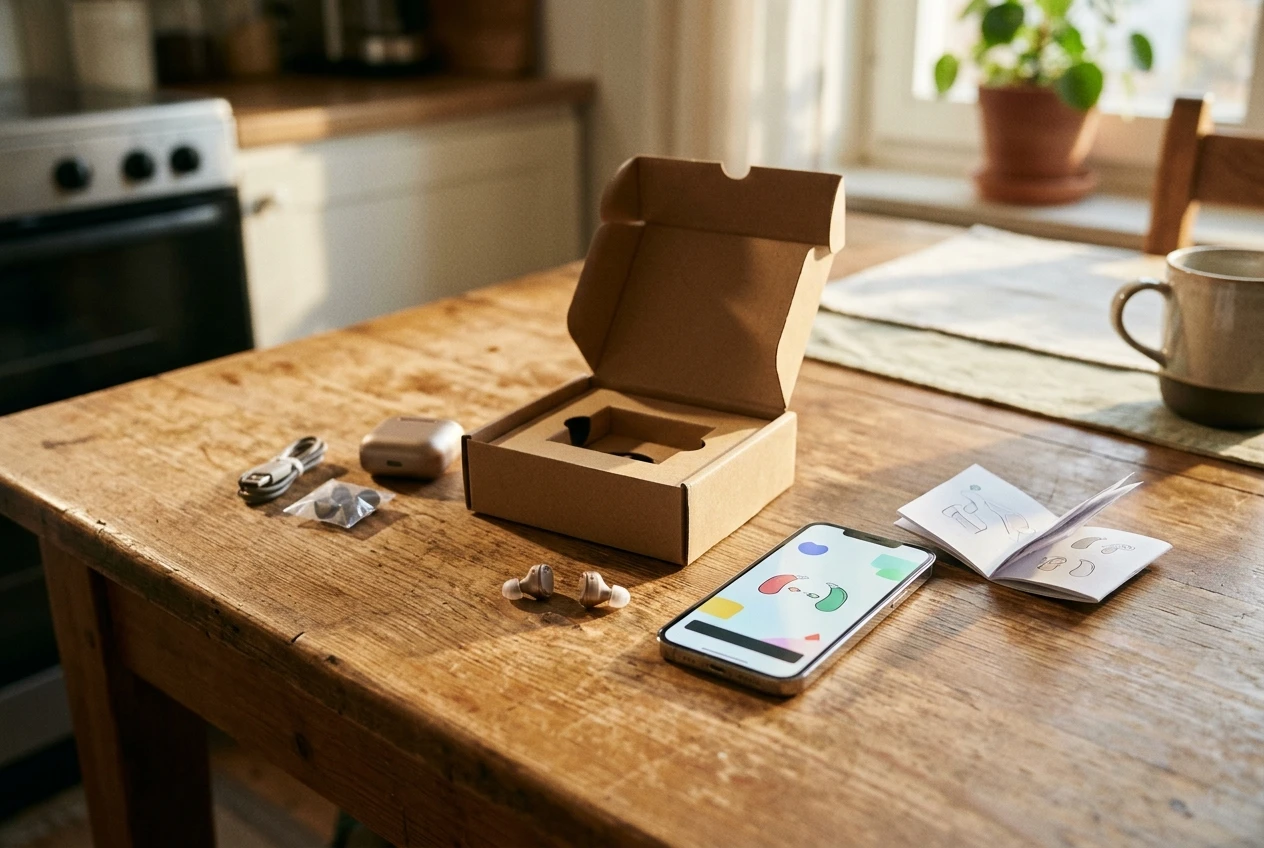
Since 2022, adults aged 18 and older in the US can buy hearing aids without a prescription or a hearing test, as long as they have perceived mild to moderate hearing loss.
You adjust them yourself, usually with a phone app.
Two things to watch for:
- Read the FDA labeling on the box. NCOA points out that FDA “registration” isn’t the same as FDA “approval,” so read what the product actually claims.
- Type the website address in yourself. Don’t buy from ads on social media. NCOA warns about scam ads.
What a Prescription Hearing Aid Is
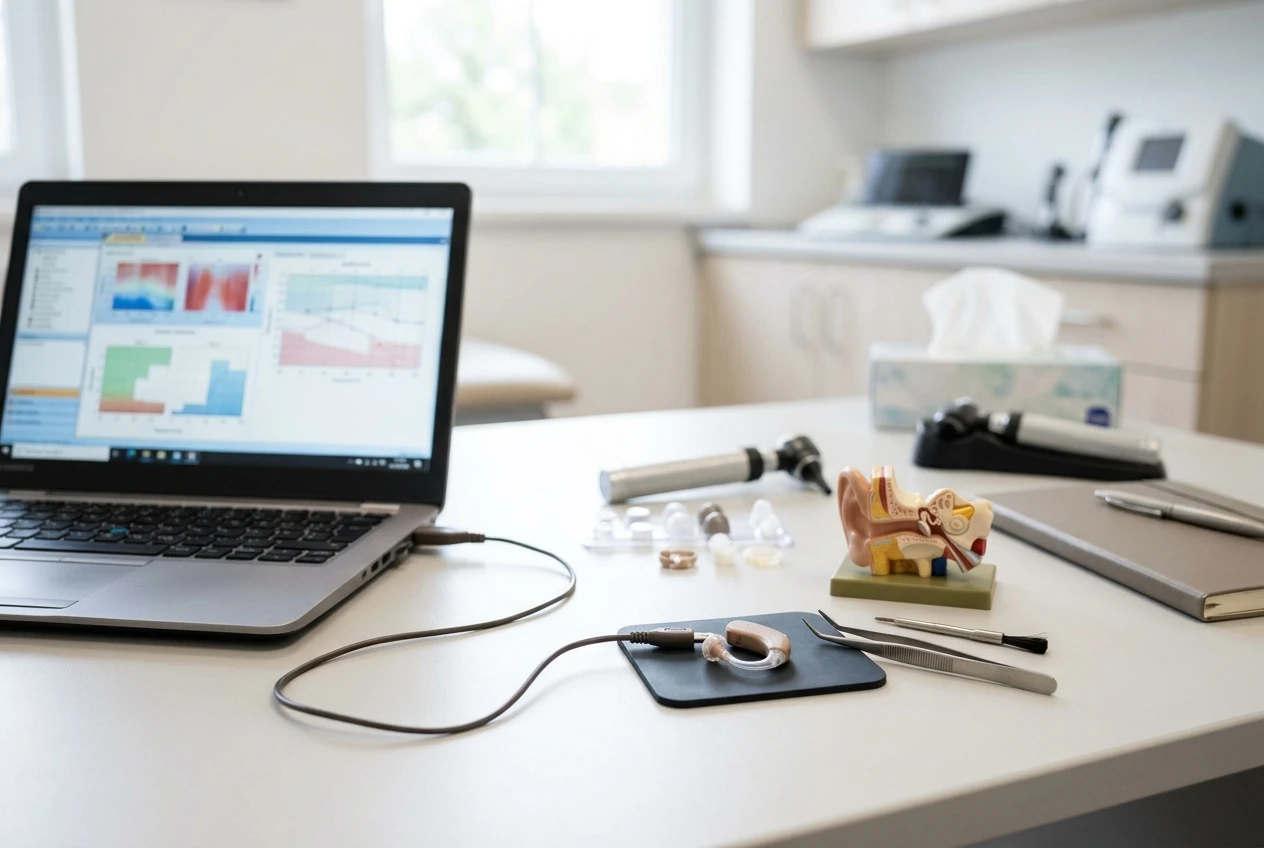
A prescription hearing aid is programmed by a hearing professional, usually an audiologist, after a full hearing test.
They set it to your hearing and your ear shape, then fine-tune it at follow-up visits. It covers everything from mild to profound hearing loss.
Mind you, before I confirmed the hearing aid, the Phonak company was kind enough to allow me to trial use their different models.
Let me just say, that the first fit may not always be the right one.
I had to change the settings, go for follow-ups, and put different programs before I could say that I was happy. In fact, I thought that the CROS model would help me.
But I still leaned on wearing one hearing aid most of the time.
BOTTOM LINE: I eventually found what worked for me and stuck to it. And you need to do the same.
OTC vs Prescription: Side by Side
OTC | Prescription | |
|---|---|---|
Who it’s for | Adults 18+ with perceived mild to moderate loss | Any level of hearing loss |
Typical cost per pair | Roughly $200 to $1,000 in some sources; NCOA’s list runs from $99 to $2,699 | Roughly $2,000 to $6,000 or more |
Hearing test needed? | No (but strongly recommended) | Yes |
Fitting | You do it yourself, usually with an app | A professional programs and adjusts them |
Follow-up care | Mostly remote or self-service | Usually included |
Tinnitus features | Often basic masking sounds; less adjustment | Often masking or notch therapy, tuned to your hearing loss |
Trial period | Often 45 to 100 days | Often 30 days or more; varies |
Insurance | Original Medicare doesn’t cover; HSA/FSA often allowed | Original Medicare doesn’t cover; some plans do |
Price ranges are approximate figures from Healthline, NCOA and Treble Health. Treble Health sells prescription care, so I used only its general descriptions. Prices change, so check before you buy.
Tinnitus Features: Where the Two Really Differ
This is the part that matters most to me.
Prescription hearing aids often have tinnitus tools built in.
That can mean masking sounds, such as white noise, pink noise or ocean sounds, or “notch therapy,” which reduces amplification at the pitch of your tinnitus.
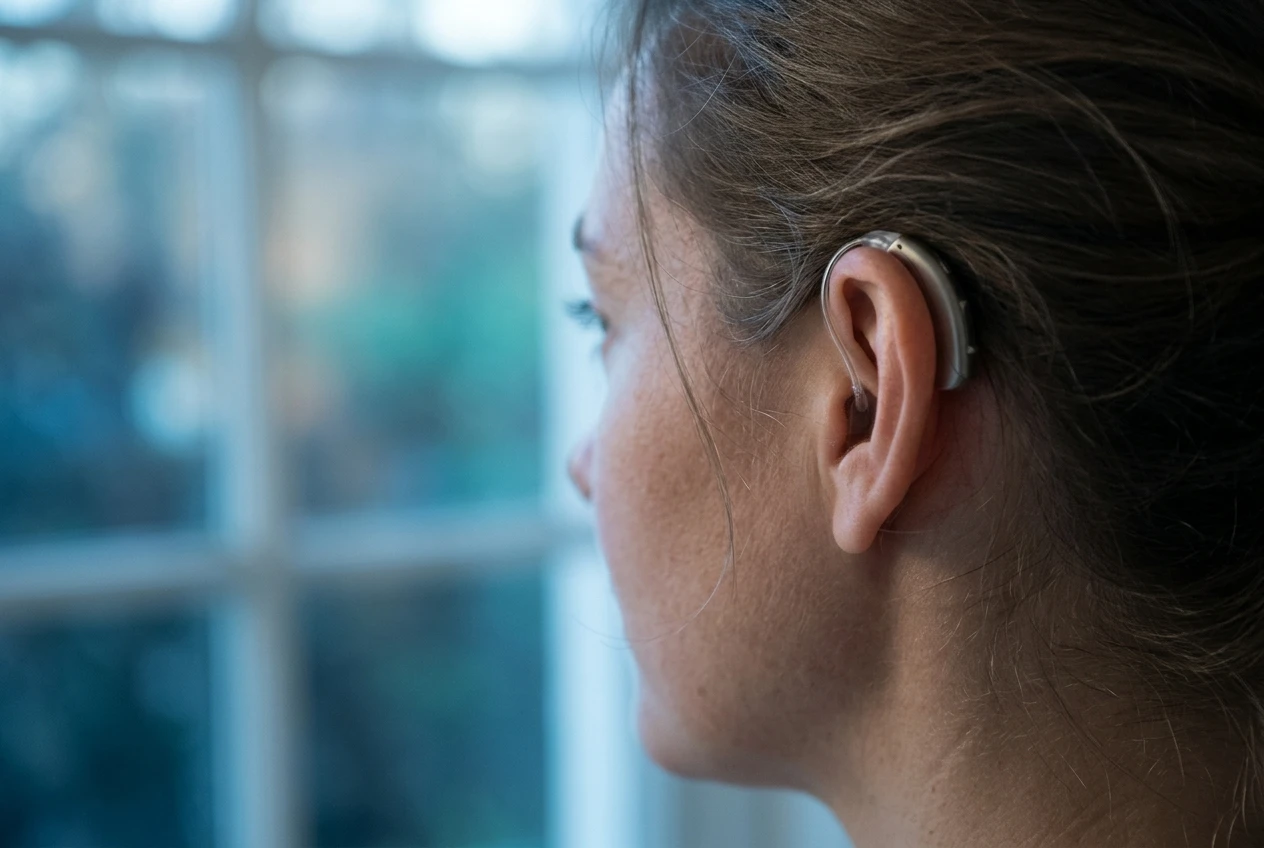
Because a professional programs them from your test results, the sound can be matched to your hearing loss.
My Phonak does have a range of programs. For five years now, I only installed one program.
Why?
Well, the Phonak is powerful to help me hear over the loud continous Tinnitus, and that’s really all that I needed. And the bonus is that if my ears were bad, I had the choice of increasing the volume of the hearing to counter that ringing noise.
So, it suited me perfectly.
OTC hearing aids usually have fewer tinnitus controls. A few include masking sounds in their app. NCOA’s “best for tinnitus” OTC pick is the Elehear Beyond Pro, which offers more than 20 sounds you can mix. I haven’t worn it, but I did go through the specs for the newer model in my Elehear Beyond 2 Pro review.
One honest limit: none of these devices cures tinnitus. At best, they make it less noticeable and easier to live with. The research on OTC aids is also mixed, and manufacturers’ own claims deserve a careful read.
What They Cost, and Whether Insurance Helps
- OTC: from around $100 for basic models to $2,000 or more, depending on the source.
- Prescription: commonly $2,000 to $6,000 a pair or more, often including fitting and follow-up.
- Original Medicare doesn’t cover hearing aids or the exams to fit them. Some Medicare Advantage plans offer hearing benefits, so check your plan.
- HSA and FSA funds can often be used.
Who Might Start With OTC
An OTC aid could be a sensible first step if:
- You’re an adult with mild to moderate hearing loss
- Your tinnitus is manageable, and you mainly want to hear better
- You’re comfortable adjusting settings in a phone app
- Cost is a real barrier, and you want a long trial to test it
Who Should Start With Prescription
I’d go to an audiologist first if:
- Your hearing loss is more than mild to moderate, or you’re not sure
- Your tinnitus is very bothersome, and you want masking tuned to your hearing
- You want in-person fitting and follow-up
- Your hearing differs between the two ears (more on that below)
See a doctor before buying any hearing aid if you have:
- Ringing or hearing loss in one ear only, or a clear difference between ears
- Sudden hearing loss or sudden-onset tinnitus
- Dizziness, ear pain, fluid or discharge
- Tinnitus that pulses with your heartbeat
- You’re under 18 (OTC aids aren’t meant for you)
That list matters to me personally.
Uneven hearing between the ears is the kind of thing that needs a proper assessment first, and a hearing aid is the wrong place to start.
What I’d Check Before You Buy
- Get a hearing test first. An in-person test is more complete than an online one, and it can reveal causes such as wax or infection.
- Look for a long trial. NCOA prefers 100 days, since adjusting takes time. Under 45 days is short.
- Read the return policy. Who pays return shipping? Is there a restocking fee?
- Check the warranty. A year is common for OTC; prescription aids often come with 2 to 3 years.
- Check the support. Can you reach a real person?
- Confirm the tinnitus features. Don’t assume. Look for the masking sounds and how adjustable they are.
- Review your medicines. Some can affect hearing or tinnitus, as I explained in my article on tinnitus and antidepressants. Never stop a medicine without speaking to your prescriber.
My Honest Take
Here’s where I land.
If your hearing loss is mild to moderate and money is tight, a well-chosen OTC aid with a long trial is a reasonable way to start. If your tinnitus is a major problem, or your hearing is worse than mild to moderate, a prescription aid fitted by an audiologist is more likely to give you the tuning and follow-up you need. I chose the prescription route, and honestly speaking I am gratef
Whichever way you go, do the hearing test first. It’s the cheapest step, and it protects you from spending money on the wrong thing.
If you want to see what an OTC option looks like in practice, read my Elehear Beyond 2 Pro review. And if you’re curious about the high-end device route, I looked at Lenire too.
What are you wearing, or thinking about wearing? Tell me in the comments. Don’t share your medication details, but do tell me what’s made the biggest difference for you.
Frequently Asked Questions
Are OTC hearing aids good for tinnitus? They can help, mainly by making sounds around you clearer, which often makes tinnitus less noticeable. Some include masking sounds. They tend to offer less tuning than prescription aids.
Do OTC hearing aids have tinnitus masking? Some do. For example, the Elehear models include masking sounds in their app. Check the specific model.
Are OTC hearing aids cheaper than prescription? Generally yes, though prices overlap at the top end. Prescription prices often include fitting and follow-up care.
Does Medicare cover hearing aids? Original Medicare does not. Some Medicare Advantage plans offer hearing benefits, so check your plan.
Can I buy a hearing aid without a hearing test? OTC aids don’t require one. A test is still strongly recommended, because it rules out causes a hearing aid can’t fix.
Can hearing aids make tinnitus worse? Setting the volume too high can leave you with louder ringing afterward. Poor fit can also be uncomfortable. If your tinnitus gets worse, take them out and talk to a professional.
Is there a cure for tinnitus? No. Hearing aids manage tinnitus; they don’t cure it.
This article is general information and not a substitute for medical advice. Please speak to your doctor or audiologist about your own situation.